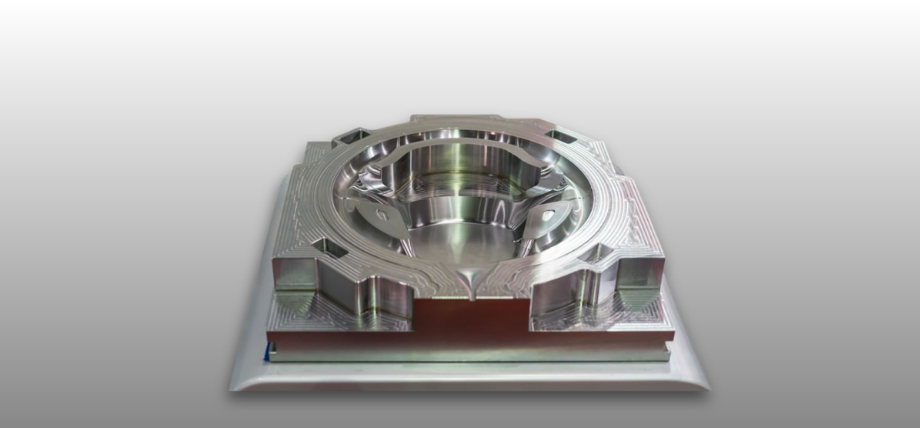
Medical Die Casting

Precision die cast components for medical devices and equipment manufactured to the exact tolerances, certifications, and quality standards that healthcare demands.

Trusted by the companies

ISO 9001:2015

ISO 13485:2016

AS9100D

ITAR Registered

NADCAP Accredited

Importance

Why Die Casting For Medical Equipment Is Important?

Die casting is a natural fit for the medical industry. It produces strong, dimensionally accurate parts at volume with the repeatability and material performance that life-critical devices require.

01

Precision & Repeatability

Die casting produces components with consistent dimensions and surface quality across every production run. Tight tolerances are held part after part critical when components must fit and function correctly inside medical device assemblies without manual adjustment.

02

Complex Geometry in a Single Shot

Intricate shapes, thin walls, and multi-feature parts can be produced in one casting. This reduces the number of individual components in a device, simplifies assembly, and allows features that would otherwise require multiple machining steps to be built directly into the casting.

03

High-Volume Efficiency

Once tooling is in place, die casting is one of the most efficient processes for producing identical metal parts at scale. Per-unit costs drop significantly with volume, making it ideal for OEMs scaling medical device production across thousands or hundreds of thousands of units.

04

Durability for Clinical Environments

Die cast aluminum and zinc components withstand sterilization cycles, repeated disinfection with detergents, and the physical demands of daily clinical use. Cast metal outperforms plastic in high-temperature or chemically aggressive environments common in medical settings.

05

Strength-to-Weight Advantage

Aluminum die castings deliver excellent structural performance at low weight a key advantage in portable medical devices, handheld instruments, and imaging equipment where reducing mass improves usability without compromising structural integrity.

06

Built-In EMI / RFI Shielding

Metal die cast enclosures provide inherent electromagnetic and radio frequency interference shielding valuable for diagnostic monitors, imaging systems, and surgical equipment where sensitive electronics must be protected from interference in busy clinical environments.

Types of Die Casting

We operate both hot and cold chamber die casting machines, matched to the alloy type and tolerances your medical component requires.

Hot Chamber Die Casting

In hot chamber casting, the injection mechanism sits submerged in the molten metal reservoir, allowing for fast, consistent cycle times. This process is well suited to high-volume production of zinc alloy medical device components with thin wall sections and fine surface detail exactly the type of small, intricate part common in medical instruments and delivery devices.

  • Best suited for zinc alloys
  • Faster cycle times, higher throughput
  • Excellent thin-wall and fine-detail capability
  • Strong dimensional consistency run-to-run
  • Reduced need for secondary machining

Cold Chamber Die Casting

Cold chamber casting ladles molten metal into a separate chamber before injecting it into the mold under high pressure. This handles higher melting-point alloys like aluminum and is ideal for structural medical equipment parts that demand superior strength-to-weight performance and tight tolerance specifications housings for imaging equipment, surgical robot arms, and diagnostic device frames.

  • Best suited for aluminum alloys
  • Superior strength-to-weight output
  • Tight tolerances on structural parts
  • Handles higher-melting-point metals
  • Ideal for imaging and surgical equipment

From Concept to Component

Every stage is managed with quality in mind. Click any step to see how we handle it.

01

Tooling & Mold

Design for manufacturability from day one

02

Die Casting

Hot or cold chamber production to spec

03

CNC Machining

In-house machine shop for final tolerances

04

Surface Finishing

Anodize, plating, coating, laser marking

05

Assembly

Complete assemblies, ready to install

Design for Manufacturability

Good casting starts before the first shot. We work with medical device designers early in the development cycle to make sure parts are designed in a way that produces consistent, high-quality results.

Wall Thickness Review

Uniform wall thickness reduces porosity and warping, improving dimensional stability in the final casting.

Draft Angle Optimization

Adequate draft on all vertical surfaces ensures clean ejection and extends the service life of production tooling.

Parting Line Placement

Strategic parting line positioning minimizes flash and reduces secondary finishing operations on finished medical parts.

Feature Consolidation

We identify opportunities to combine multiple components into a single casting, reducing part count and assembly complexity.

Prototype & T1 Sample Approval

First-article samples are inspected and documented before full production is approved, with dimensional reports provided for customer review.

Medical Equipment Gallery

Where Our Castings Are Found

RapidoParts die cast components appear throughout the medical and dental industries

01

IV & Infusion Pumps

Precision cast housings and brackets for IV and infusion pump assemblies requiring tight tolerances and reliable long-term performance in continuous clinical use.

02

Dialysis Machines

Structural and enclosure components for dialysis equipment, produced to exacting quality and surface finish specifications with full material traceability.

03

Diagnostic Imaging

Lightweight aluminum die cast parts for CT, MRI, ultrasound, and X-ray equipment where weight reduction and dimensional precision directly affect system performance.

04

Dental Equipment

Cast components and assemblies for dental instruments, operatory chairs, and handpieces including high-detail zinc parts with plated or anodized finishes.

05

Surgical Robots

High-strength aluminum castings for operating room robotic systems where structural rigidity and minimal weight are both non-negotiable design requirements.

06

Oxygen & Respiratory

Die cast parts for oxygen delivery systems, ventilators, and concentrators, meeting corrosion resistance and pressure tolerance specifications required for patient safety.

07

Patient Monitors

Enclosures and structural parts for bedside and portable patient monitoring equipment, with inherent EMI shielding from cast metal housings.

08

Insulin Delivery Systems

Intricate zinc die cast components for insulin pumps and delivery devices requiring fine dimensional detail and consistent surface finish across production runs.

Surface Finishing

All finishing processes are handled in-house, eliminating outside vendors and giving us direct quality control over every medical component from raw casting through final finish.

Anodize

Standard and hardcoat anodize for aluminum parts. Improves surface hardness, corrosion resistance, and dielectric properties common specifications for medical device enclosures and structural housings.

Chromate Conversion

Chromate conversion coating for aluminum, providing corrosion protection and a reliable adhesion base for powder coat or paint finishes on medical and food-grade components.

Electroless Nickel

Uniform electroless nickel plating for complex geometry medical parts where consistent coating thickness across all surfaces including bores and recesses is a critical specification.

Powder Coat

Durable powder coating in a wide range of colors and textures for medical equipment enclosures where appearance, surface protection, and cleanability with disinfectants are all required.

Laser Marking

Permanent, high-precision laser marking for part identification, serial numbers, lot codes, and regulatory marking without adhesives or labels that can degrade under repeated sterilization.

Plating

Additional plating options for zinc and aluminum medical device components, applied to customer drawings and specifications to meet corrosion resistance, conductivity, or appearance requirements.
Capability Die Casting CNC Machining Only Plastic Injection Mold
High-volume cost efficiency
✓ Excellent
✗ High cost per part
✓ Good
Tight dimensional tolerances
✓ ±0.001″ achievable
✓ Very tight
~ Moderate
EMI / RFI shielding
✓ Inherent
✓ Yes
✗ Requires coating
Sterilization compatibility
✓ Autoclave & chemical
✓ Yes
~ Material dependent
Complex thin-wall geometry
✓ Excellent
~ Limited
✓ Good
Structural strength
✓ High
✓ Very high
✗ Lower
Low-volume / prototype runs
~ Tooling cost applies
✓ Excellent
~ Tooling cost applies

Industries Served

Our precision die casting and machining capabilities serve a range of regulated industries alongside medical, each holding the same commitment to accuracy, documentation, and quality.

Medical & Dental

Aerospace

Aviation

Food Processing

Scientific Instruments

Electronics & Communications