
±0.1 mm Tolerance
10K+ Parts Per Run
Al · Zn · Mg Metals Supported
100% QC Inspected
Trusted by the companies


A die cast die is formed from two halves: the cover die (cover half), which is mounted to the fixed platen of the machine, and the ejector die (ejector half), which is mounted to the moving platen. Together, the two halves form a closed die cavity
During the casting process, molten metal is injected under high pressure through the cover die, filling the die cavity via the runner system and gates.
A trim die , a purpose-built trim tool mounted in a trim press, is engineered as a complete die matched to the exact profile of the casting. When the cast part is placed in the trim press and the hydraulic cylinders drive the tool through its stroke, the excess material is sheared cleanly away. The result is a dimensionally accurate, flash-free casting ready for post-processing. For designs with multiple cavities, a single trim die stroke can process all cast parts from one shot simultaneously


A high-volume method using a precision trim die in a hydraulic press to remove excess material in one stroke. Fast, repeatable, and cost-effective for aluminum, zinc, and magnesium castings.
High Volume
Used for delicate areas where automation may cause damage. Skilled technicians remove gates and flash by hand to protect complex features and sensitive surfaces.
Complex Geometry
Removes burrs after trimming using cutting, grinding, or sanding. Ensures a smooth, consistent surface before coating or finishing processes.
Surface Ready
Batch process using tumbling equipment and abrasive media to deburr large quantities efficiently, ideal for small, complex parts.
Batch Efficient
Uses high-energy lasers for precise trimming of complex or thin-walled parts where mechanical methods may cause distortion.
High Precision
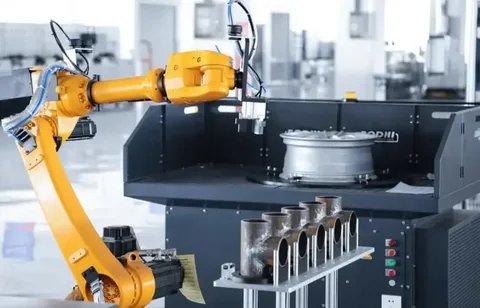
Automated system where robots handle and position castings for trimming, improving speed, consistency, and reducing manual handling.
Automation
Precision trimming ensures die cast parts meet specified tolerances and fit correctly during assembly ,critical for automotive, electronics, and medical applications where every micron matters.
Clean trimming of flash and overflow material produces a professional surface finish across cast parts, ready for painting, anodising, powder coating, or plating without additional rework.
Removing excess material and burrs at ejector pins and the parting line eliminates stress concentration zones, ensuring cast parts achieve their full service life under operational load cycles.
Automated trim die and trim press operations are far faster and more consistent than manual methods, reducing per-unit cycle time and lowering overall production cost for high volume die cast runs.
Trimmed runners, gates, and flash are separated, collected, and returned to the melt as recyclable metal ,minimising scrap cost and improving the overall material efficiency of the casting process.
Benefits
Frequently Asked Questions